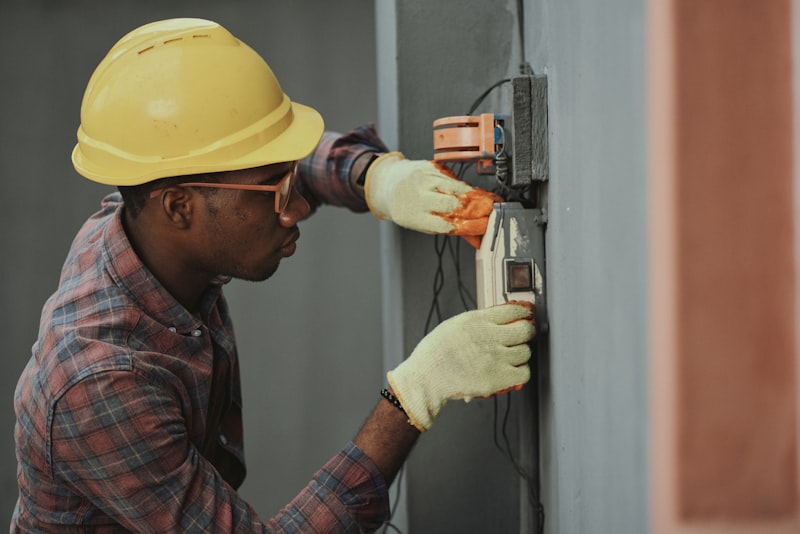
Your electrical panel capacity fundamentally determines what EV charging options are available for your home without major upgrades. Understanding how to evaluate your panel and what capacity is needed for various charging solutions helps you make informed decisions and anticipate potential costs before beginning the installation process.
How Electrical Panels Work
Your home electrical panel receives power from the utility company and distributes it to circuits throughout your home. The main breaker indicates the maximum amperage your panel can handle simultaneously, commonly 100, 150, or 200 amps in residential settings. Individual circuit breakers protect specific circuits, and the sum of all these breakers typically exceeds the main breaker rating because not all circuits operate at maximum capacity simultaneously.
When planning EV charger installation, the question becomes whether your panel has sufficient capacity to add a 40 to 60 amp charging circuit on top of existing loads. This assessment requires understanding your current usage patterns and the mathematical limits of your panel configuration.
Capacity Needed for EV Charging
Different charging solutions require different amounts of panel capacity. A NEMA 14-50 outlet for use with a Tesla Mobile Connector requires a 50-amp breaker, though the actual continuous load is limited to 40 amps per electrical code requirements for continuous loads. The Tesla Wall Connector at maximum output requires a 60-amp breaker providing 48 amps of continuous charging power.
Lower-powered installations are possible if panel capacity is limited. A Wall Connector can be configured to operate at reduced amperage, such as 24 or 32 amps, requiring only a 30 or 40 amp breaker respectively. While this reduces charging speed, it may allow installation on panels that cannot accommodate full-power charging.
Evaluating Your Current Panel
Start by identifying your main breaker amperage. Then, examine the panel for available breaker slots. A full panel with no empty positions requires reorganization, such as replacing single breakers with tandem breakers where permitted, or sub-panel installation.
Consider your existing high-draw appliances when assessing capacity. Central air conditioning typically requires 30 to 60 amps depending on size. Electric water heaters draw 20 to 30 amps. Electric dryers use 30 amps, and electric ranges may use 40 to 50 amps. The sum of these major loads plus your EV charger should remain well below your main breaker rating during realistic usage scenarios.
Professional load calculations consider not just breaker ratings but actual usage patterns. Your air conditioning rarely runs simultaneously at maximum power with your electric dryer, oven, and water heater. These diversity calculations often reveal more available capacity than simple breaker arithmetic suggests.
When Panel Upgrades Are Needed
Homes with 100-amp service frequently require panel upgrades to accommodate EV charging comfortably. While installation may be technically possible without upgrading, operating near maximum capacity creates inconvenience and potential nuisance breaker trips. Upgrading to 200-amp service provides substantial headroom for EV charging and future electrical needs.
Panel age also influences upgrade decisions. Panels more than 30 years old may use outdated technology, have reduced reliability, or lack modern safety features. Combining an EV charger installation project with a panel upgrade modernizes your home electrical infrastructure and ensures decades of reliable service.
Zinsco and Federal Pacific panels, common in homes built in the 1960s through 1980s, have known safety issues and should be replaced regardless of EV charging plans. If your panel bears either of these brand names, prioritize replacement for safety reasons.
Sub-Panel Solutions
Installing a sub-panel near your charging location offers an alternative to main panel replacement in some situations. A sub-panel receives power from your main panel via a high-amperage circuit and provides additional breaker slots at the secondary location.
This approach works well when your main panel has capacity to spare a 60 to 100 amp feeder circuit but lacks available breaker slots. The sub-panel can serve your EV charger and potentially future additions like workshop equipment or hot tub circuits.
Smart Panel Technologies
Emerging smart panel technologies offer innovative solutions for capacity-constrained situations. These systems monitor real-time electrical usage throughout your home and dynamically allocate power to EV charging when other loads are low. This allows higher charging speeds during off-peak home usage periods without requiring panel upgrades.
While more expensive than traditional solutions, smart panels provide flexibility that may prove valuable as homes add additional electrical loads including second EVs, heat pumps, pool equipment, and other modern electrical demands.
Professional Assessment
Accurate panel capacity evaluation requires professional assessment. ChargeOrlando provides thorough electrical system evaluations as part of our consultation process. We examine your panel, calculate loads, identify any concerns, and recommend the most cost-effective approach to achieving your charging goals. Contact us today to schedule your evaluation and receive a detailed proposal for your EV charger installation.