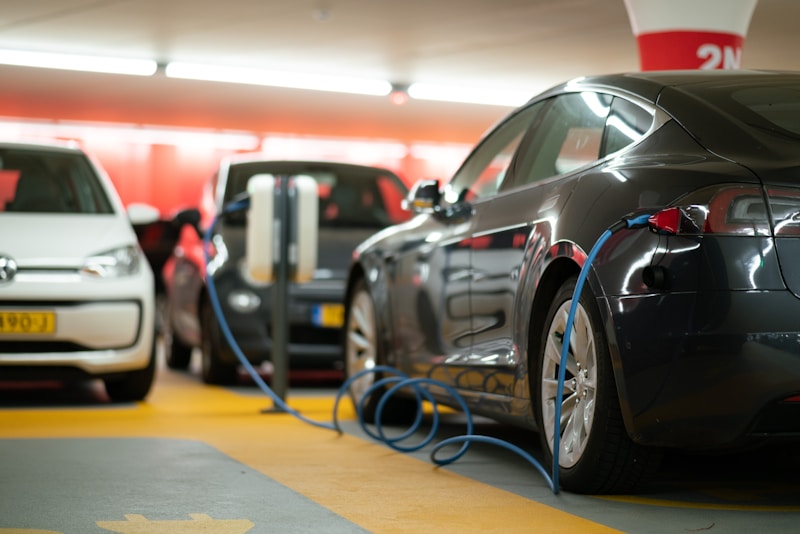
Florida earns its reputation as the lightning capital of the United States, with Central Orlando experiencing more thunderstorms than nearly any other metropolitan area in the country. This reality naturally leads EV owners to question whether charging during storms poses any safety risks to themselves, their vehicles, or their homes.
Understanding Charging During Storms
The good news is that charging your electric vehicle during thunderstorms is generally safe when your home has proper electrical grounding and modern protective equipment. Electric vehicles and their charging systems incorporate multiple safety features designed to handle electrical anomalies, including the power fluctuations that can accompany storms.
Your home electrical system includes grounding connections that provide a path for errant electrical energy, including lightning-induced surges, to dissipate safely into the earth rather than damaging equipment or creating hazards. This fundamental safety system protects all your electrical devices, including EV chargers, during electrical storms.
The charging cable between your vehicle and the charger contains sophisticated electronics that monitor the connection continuously. Any abnormality, including surge events, triggers automatic disconnection to protect both the vehicle and charging equipment. These safety systems operate in milliseconds, far faster than damaging energy can propagate.
Surge Protection Considerations
While standard electrical systems provide baseline protection, adding dedicated surge protection enhances safety further. Whole-home surge protectors, installed at your electrical panel, intercept surge energy before it reaches individual circuits. These devices offer protection not just for EV charging but for all electronics throughout your home.
Point-of-use surge protectors specifically designed for EV chargers provide an additional layer of defense. These devices install between your electrical panel and the charger, offering protection tailored to the high-power circuits used for EV charging. Many EV owners in lightning-prone areas consider this investment worthwhile for peace of mind.
The Tesla Wall Connector includes built-in surge protection as part of its design. This integrated protection handles typical surge events without requiring additional equipment. However, supplementary whole-home protection remains advisable in Florida given the frequency and intensity of electrical storms in our region.
Practical Considerations
Despite the safety systems in place, some practical considerations merit attention during severe weather. If lightning strikes are occurring in your immediate vicinity, meaning you can see the flash and hear thunder within seconds, pausing your charging session until the storm passes represents reasonable caution.
Power quality during storms can affect charging efficiency. Voltage fluctuations may cause your charging session to pause and restart, which is not harmful but can affect the total energy delivered if the storm is prolonged. This typically poses no practical concern for overnight charging where ample time exists to reach your target charge level.
If your area experiences a power outage during charging, the session stops automatically and your vehicle remains safe. When power restores, depending on your settings, charging may resume automatically or require you to restart the session manually through your vehicle or app.
Lightning and Your Vehicle
Your electric vehicle is actually one of the safer places to be during a lightning storm, similar to any other enclosed vehicle with a metal body. The principle of the Faraday cage causes electrical energy to travel around the exterior rather than through the interior. Whether charging or not, occupants inside the vehicle are protected from lightning strikes.
A direct lightning strike to your home or nearby infrastructure is an extremely rare event despite Florida high lightning frequency. When such strikes occur, the primary risk is to the utility infrastructure and your home main electrical system rather than specifically to EV charging equipment.
Garage Charging Benefits
Charging in an enclosed garage provides practical benefits during Florida rainy season beyond electrical considerations. You avoid getting wet when connecting or disconnecting your vehicle, and the charging cable stays dry and clean. The garage environment also moderates temperature extremes, maintaining optimal charging conditions.
Proper garage ventilation remains important regardless of weather conditions. While EV charging produces minimal heat compared to gasoline vehicle operation, adequate airflow ensures comfortable conditions for both charging equipment and any activities you perform in the garage space.
Installation Quality Matters
The safety of charging during any conditions depends fundamentally on proper installation. Professional electricians ensure all connections are secure, grounding is properly established, and protective devices are correctly installed and functional. Cutting corners during installation creates risks that extend beyond storm conditions to everyday use.
ChargeOrlando installations meet or exceed all applicable codes and incorporate best practices for Florida conditions specifically. We consider surge protection, proper grounding, and weather resistance as essential elements of every installation. Contact us to discuss your EV charging needs and ensure your setup provides safe, reliable charging regardless of Florida unpredictable weather.